
Can Periodontal Disease Be Reversed?
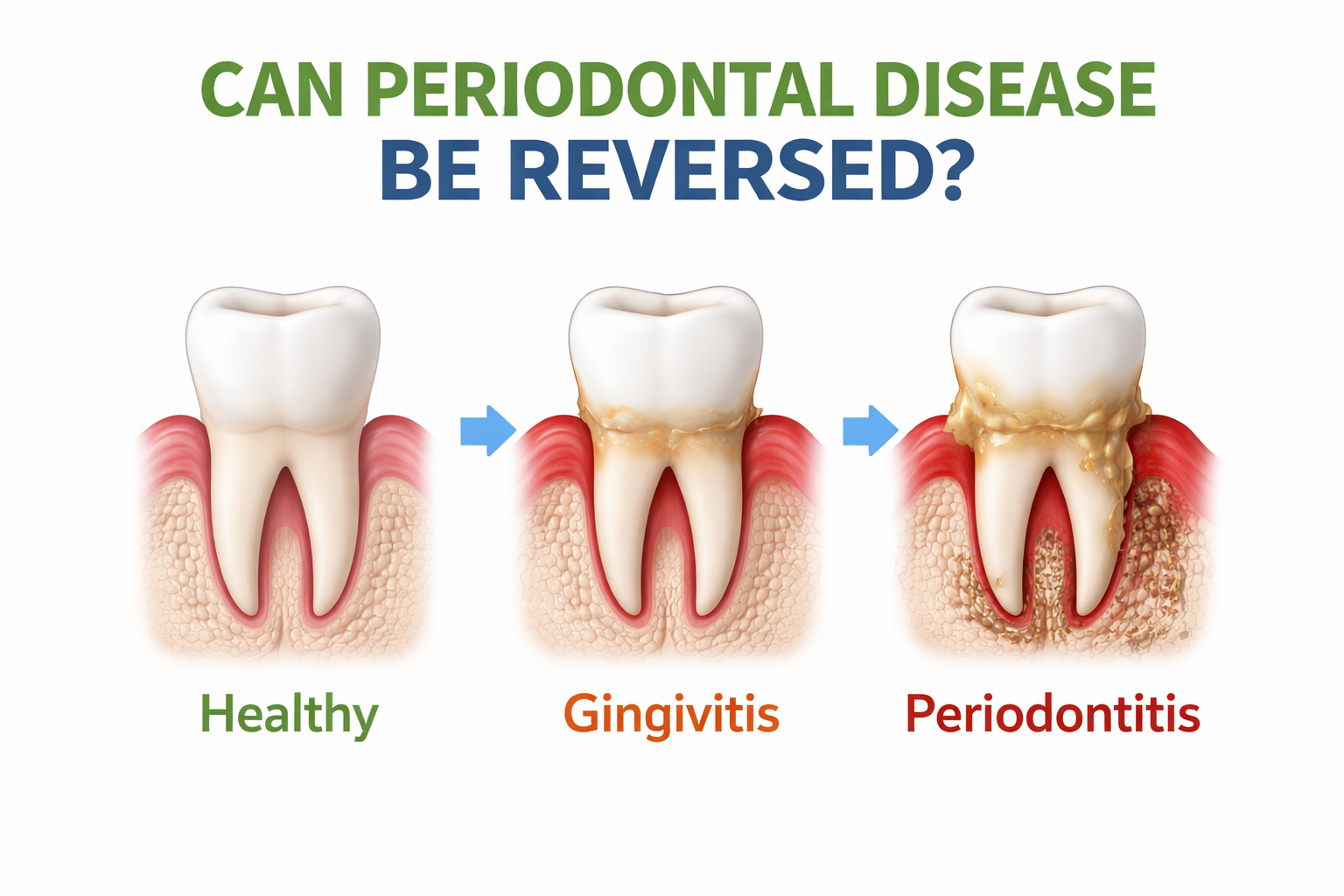
Gum disease, also known as periodontal disease, is a common issue that can affect your oral health. Many people wonder if this condition can be turned around once it starts. The good news is that depending on how far it has progressed, there are ways to manage and even reverse some of the effects of gum disease. Understanding the different stages and what you can do is the first step toward a healthier smile.
Key Takeaways
- Periodontal disease, or gum disease, is a condition that affects the gums and bone supporting your teeth.
- Early-stage gum disease, known as gingivitis, is reversible with good oral hygiene and professional dental care.
- More advanced stages of gum disease, called periodontitis, cannot be fully reversed because bone and tissue loss is permanent, but the progression can be stopped and managed.
- Signs of gum disease include red, swollen, or bleeding gums, persistent bad breath, and receding gums.
- Professional treatments like scaling and root planing, and in more severe cases, surgery, are necessary to manage periodontitis and prevent further damage.
Understanding Periodontal Disease
Periodontal disease, often called gum disease, is a common issue that affects the tissues around your teeth. It starts when plaque, a sticky film full of bacteria, builds up on your teeth. If you don't clean this plaque away regularly with brushing and flossing, it can harden into tartar. Tartar is much harder to remove and can irritate your gums.
At first, this irritation might just cause gingivitis. This is the earliest stage of gum disease. You might notice your gums looking red, feeling a bit swollen, or bleeding when you brush or floss. The good news is that gingivitis is reversible if caught early. With good home care and professional cleanings to get rid of tartar, your gums can go back to being healthy.
However, if gingivitis isn't treated, it can turn into periodontitis. This is when the problem gets more serious. The bacteria can spread below the gum line, causing inflammation that damages the bone and tissues holding your teeth in place. This is where things can get tricky, and the damage might not be fully reversible.
- Gums that seem to be pulling away from your teeth, making them look longer.
- Deep pockets forming between your gums and teeth.
- Teeth that feel loose or seem to be shifting their position.
- Persistent bad breath that doesn't go away.
It's important to know that while the damage from advanced periodontitis might not be completely undone, the disease itself can be managed. Professional treatments can help stop it from getting worse and protect your oral health.
The progression of gum disease is often gradual, and recognizing the early signs is key. What might seem like a minor issue, like occasional bleeding gums, could be the start of something that needs attention. Early intervention makes a big difference in managing and potentially reversing the effects.
Can Periodontal Disease Be Reversed?
The question of whether periodontal disease is reversible is a common one, and the answer really depends on how far along the condition has progressed. Think of it in stages. The earliest form, gingivitis, is often considered reversible. This is when the gums are inflamed, maybe a bit red and swollen, and might bleed when you brush or floss. At this point, the damage is usually limited to the gum tissue itself, and with diligent care, including professional cleanings and a solid at-home oral hygiene routine, you can often get your gums back to a healthy state. It’s like catching a small problem before it becomes a big one.
However, when gingivitis is left untreated, it can develop into periodontitis. This is where things get more complicated. Periodontitis means the infection has spread below the gum line, affecting the bone and tissues that hold your teeth in place. Once you lose that supporting bone and tissue, it generally doesn’t grow back on its own. So, while periodontitis isn’t typically considered reversible in the same way gingivitis is, it is definitely manageable. The goal of treatment for periodontitis shifts from reversal to stopping the disease's progression and preventing further damage. This involves professional interventions to clean out the infection and stabilize the condition.
- Gingivitis: Often reversible with improved oral hygiene and professional dental cleanings.
- Periodontitis: Not fully reversible, but manageable with professional treatment to halt progression and preserve existing structures.
So, while you can't always turn back the clock completely once periodontitis sets in, taking action is still incredibly important. Early detection and consistent care are key to managing gum disease and keeping your smile healthy for the long haul. If you're noticing any signs of gum trouble, it's always best to get it checked out.
Signs That May Indicate Gum Disease
It's easy to overlook the early whispers of gum trouble, but paying attention to certain changes in your mouth can make a big difference. Gum disease often starts subtly, and you might not even feel pain at first. However, there are several common indicators that suggest your gums need attention.
One of the first things people notice is bleeding. Gums that bleed easily, especially when you brush or floss, are a significant warning sign. This isn't normal and points to inflammation. You might also see that your gums look red or even a bit purplish, rather than their usual healthy pink. They might also feel tender or sore to the touch.
Another common symptom is persistent bad breath, sometimes described as a metallic or unpleasant taste in your mouth. This isn't just about needing to brush more; it can be a sign of bacteria building up below the gum line. Over time, you might notice your gums starting to pull away from your teeth. This gum recession can make your teeth look longer and can also lead to increased sensitivity.
- Swollen gums: Your gum tissue might appear puffy or enlarged.
- Loose or shifting teeth: As the supporting structures weaken, teeth can start to feel wobbly or move out of place.
- Deep pockets: Small spaces can form between your teeth and gums, which are hard to clean and harbor bacteria.
If you're experiencing any of these signs, it's important to get them checked out. Early detection is key to managing gum health effectively.
Sometimes, the only way to detect more serious issues like bone loss is through dental X-rays, which is why regular dental check-ups are so important. Your dentist can measure the depth of the pockets around your teeth and assess the overall health of your gums and the bone supporting them.
Professional Treatments That Help Restore Gum Health
When at-home care isn't quite enough to manage gum disease, professional dental treatments step in to help. These procedures are designed to tackle the bacteria and damage that daily brushing and flossing can't fully address. The goal is to stop the disease in its tracks and give your gums a chance to heal.
For early stages, like gingivitis, a thorough professional cleaning is often the first line of defense. This goes beyond what you can do at home, removing hardened plaque (tartar) that irritates your gums. If the disease has progressed a bit, a deeper cleaning called scaling and root planing might be recommended. This involves cleaning below the gum line to remove bacteria and smoothing the tooth roots so your gums can reattach more easily. It's a bit more involved than a regular cleaning, but it's a key step in managing the condition.
- Pocket Reduction Surgery: This procedure involves lifting the gum tissue to allow for a more thorough cleaning of the root surfaces and bone. After cleaning, the gums are repositioned to fit more snugly around the teeth, which helps reduce the depth of the pockets and makes them easier to keep clean.
- Gum Grafting: If gums have receded significantly, exposing tooth roots, a gum graft can help. Tissue is taken from another part of your mouth and attached to the affected area. This can cover the exposed roots, reduce sensitivity, and improve the gum line's appearance.
- Guided Tissue Regeneration: This is a more complex procedure used when bone loss has occurred. It involves placing a special membrane between the gum tissue and the bone. This membrane guides the growth of bone and gum tissue, helping to regenerate the structures that support your teeth.
These professional interventions aim to halt the progression of gum disease and create an environment where healing can occur. It's important to remember that while these treatments can significantly improve your oral health and restore function, they are most effective when combined with a consistent and thorough at-home oral hygiene routine. Discussing your specific situation with your dental professional is the best way to determine which gum disease treatment is right for you.
The success of professional treatments often depends on the stage of the disease and how well it's managed afterward. Early intervention and consistent follow-up care are key to achieving the best possible outcomes for your gum health.
The Role of At-Home Care in Reversing Early Gum Disease
When it comes to tackling reversible early stage gum disease, what you do at home every single day makes a big difference. Think of it as the foundation for getting your gums back to a healthy state. Professional treatments are important, sure, but they work best when they're paired with a solid daily routine.
Consistent, thorough cleaning is the name of the game. This means brushing your teeth at least twice a day and flossing once a day. It's not just about getting your teeth clean; it's about removing the plaque that causes gum problems before it hardens into tartar, which is much harder to get rid of. If you're finding it tough to get into all the nooks and crannies, don't be afraid to ask your dentist about tools that might help.
- Brushing Technique: Use a soft-bristled toothbrush and hold it at a 45-degree angle to your gums. Gently brush in short, back-and-forth strokes, making sure to clean the outer, inner, and chewing surfaces of your teeth. Don't forget to brush your tongue too, as this can help remove bacteria that cause bad breath.
- Flossing: This is non-negotiable for getting between teeth where your toothbrush can't reach. Use about 18 inches of floss, winding most of it around your middle fingers. Gently guide the floss between your teeth using a sawing motion, then curve it into a C-shape against one tooth and slide it gently into the space between the gum and the tooth. Repeat on the adjacent tooth.
- Mouthwash: An antimicrobial mouthwash can be a helpful addition to your routine, but it shouldn't replace brushing and flossing. It can help reduce bacteria in your mouth.
Even with the best intentions, sometimes plaque and tartar build-up can be stubborn. This is why regular dental check-ups are so important. Your dental team can remove what you can't and provide guidance tailored to your specific needs.
Using the right tools can also make a big impact. While a manual toothbrush can be effective, some people find electric toothbrushes do a better job of removing plaque. Similarly, interdental brushes or water flossers might be recommended by your dentist if you have trouble with traditional flossing or have areas with significant spacing between teeth. The goal is to make your daily oral hygiene routine as effective as possible.
So, Can Periodontal Disease Be Reversed?
The short answer is: it depends on the stage. If you're dealing with gingivitis, the very early form of gum disease, then yes, it's often reversible. Good brushing, flossing, and regular dental cleanings can usually get things back to normal. However, once gum disease progresses to periodontitis, the damage to the bone and tissues holding your teeth can't be fully reversed. Think of it like this: you can't regrow bone that's been lost. But that doesn't mean it's hopeless. Periodontitis can be managed and its progression halted with professional treatment. Your dentist or a periodontist can help figure out what's going on and create a plan to stop the disease from getting worse. The key takeaway is that early detection and consistent care, both at home and with your dental team, make a huge difference in managing gum disease and keeping your smile healthy for the long haul.
Frequently Asked Questions
Can gum disease be completely cured?
Gum disease isn't fully curable because the damage to the bone and tissues supporting your teeth might not completely grow back. However, it can be managed and controlled with the right treatments and good daily care. The earliest stage, called gingivitis, is reversible if caught early.
What's the difference between gingivitis and periodontitis?
Gingivitis is the early, mild form of gum disease where gums become red, swollen, and might bleed. It's usually reversible with better brushing, flossing, and professional cleanings. Periodontitis is a more advanced stage where the infection has spread below the gum line, damaging the bone that holds your teeth, and is harder to reverse.
What are the main signs of gum disease?
Some common signs to watch out for include gums that are red, swollen, or tender, bleeding when you brush or floss, persistent bad breath, gums that seem to be pulling away from your teeth, and teeth that feel loose or sensitive.
How do dentists treat gum disease?
Treatment depends on how severe the gum disease is. For early stages, regular dental cleanings and improving your home brushing and flossing routine can help. For more advanced cases, treatments like scaling and root planing (a deep cleaning), and sometimes surgery to repair damaged tissue or bone, might be recommended.
Can I reverse gum disease just by brushing and flossing more?
While excellent brushing and flossing are crucial for preventing and managing early gum disease (gingivitis), they might not be enough if the disease has progressed. Professional dental cleanings to remove hardened plaque (tartar) and treatments recommended by a dentist are often necessary, especially for periodontitis.
What happens if gum disease isn't treated?
If left untreated, gum disease can get worse. It can lead to significant damage to the bone and tissues that hold your teeth in place, potentially causing teeth to become loose, shift, or even fall out. It can also lead to other health problems.
Blog Post Author

Contributed by DentalROI
DentalROI provides relevant dental content to help providers educate patients. The statements, services, and products referenced in this article have not been evaluated by the Food and Drug Administration, and they are not intended as a substitute for professional medical advice, diagnosis, or treatment. Always seek the advice of your dental provider with any questions or issues you may have. Specific recommendations may vary in different circumstances, so individual consultation is important.