
Bringing Back What Was Lost - How Dental Implants Help Keep Your Mouth Healthy
Losing a tooth can do much more than leave a visible gap. It can affect how you bite, speak, and eat, and it can weaken the jawbone — one of the most important foundations of oral health. Over time, missing teeth can change your smile and the shape of your face.
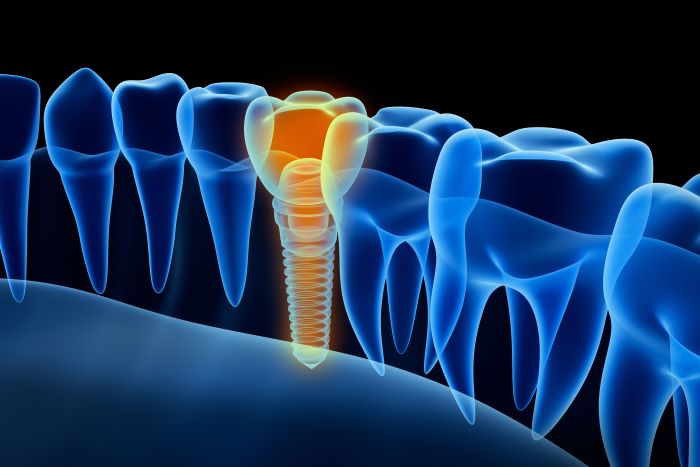
Removable dentures or traditional bridges can fill spaces, but only dental implants replace the missing root structure. This gives implants more biological support and stability than any other option, making them a key part of modern dental care.
What Happens When You Lose a Tooth
When a tooth is lost, the bone around it starts to shrink due to lack of chewing pressure. As the jawbone diminishes, nearby teeth lose support and may shift or loosen. This structural change affects the entire mouth, influencing function, appearance, and how food is broken down.
Dentures and fixed bridges can help replace missing teeth, but they do not interact with the bone the same way natural roots do. Over time, they may loosen, stop fitting correctly, or place strain on the supporting teeth.
Why Implants Do More Than Aesthetic Repair
Dental implants bond directly with the jawbone. Made mostly of medical-grade titanium, the implant post acts like a natural tooth root. Through a process called osseointegration, the implant and bone fuse together, forming a stable foundation.
At Dentist Shoreline WA, we prioritize stability so that crowns, bridges, and full-arch prosthetics can be attached independently. The result is a restoration that feels and functions like a natural tooth while maintaining healthy bone structure.
The Steps to Getting an Implant
Before implant therapy begins, the dentist evaluates the gums, teeth, and bone structure. Digital imaging — often including 3D scans — helps measure the area precisely. If bone has already been lost, grafting or sinus elevation may be required to rebuild enough support for the implant.
Most implant surgeries are performed under local anesthesia. After the implant post is placed, it needs time to heal before the final crown or bridge is attached. In some cases, a temporary restoration can be placed the same day, depending on the situation.
The final crown is carefully designed to match neighboring teeth in color and shape. Materials like zirconia and lithium disilicate are often chosen for their strength and natural appearance.
Strengths That Go Deeper Than Skin
Many patients immediately notice better comfort and chewing strength. Implants do not slip like dentures, require no adhesives, and do not affect taste or speech. Because chewing forces travel directly through the implant into the bone, implants help maintain long-term oral health.
- Improved stability
- Natural chewing function
- No risk of slipping or shifting
- Protection against bone loss
- Longer lifespan than bridges or dentures
Implants are designed to last for decades with proper care. By preventing ongoing bone loss, they also protect facial structure and reduce the problems commonly associated with long-term denture wear.
Candidacy and Considerations Before Treatment
Some patients may need additional care before getting implants. Conditions such as active gum disease, inadequate bone structure, or uncontrolled diabetes must be addressed first. Smoking can also slow healing and increase risk.
However, even patients who have experienced bone loss may still qualify after appropriate preparation. A complete diagnosis and personalized treatment plan from an experienced clinician is essential for predictable results.
Long-Term Success Hinges on Maintenance
Implants cannot get cavities, but they can fail without proper care. Daily brushing, flossing, and regular dental checkups are essential. The gum tissue around the implant must remain healthy to prevent peri-implantitis — an infection similar to gum disease.
- Brush and floss daily
- Schedule routine dental cleanings
- Avoid smoking
- Address gum inflammation early
With consistent care, implants remain one of the most predictable and durable solutions in restorative dentistry.
Final Thoughts
Dental implants restore appearance, function, and confidence by fully replacing the missing tooth — root and all. They help protect both oral health and facial structure long-term.
If you want a lasting, stable, and natural-looking solution, dental implants may be the right choice for you.
To learn more or schedule a full consultation, call 206-487-7800.
Blog Post Author

Contributed by DentalROI
DentalROI provides relevant dental content to help providers educate patients. The statements, services, and products referenced in this article have not been evaluated by the Food and Drug Administration, and they are not intended as a substitute for professional medical advice, diagnosis, or treatment. Always seek the advice of your dental provider with any questions or issues you may have. Specific recommendations may vary in different circumstances, so individual consultation is important.